A retaining wall has to do more than look polished along a patio, driveway, or sloped lawn. It must hold back soil, manage water, and withstand years of Massachusetts freeze-thaw cycles. The best retaining wall materials are the ones that suit the wall’s structural demands while complementing the architecture, landscape, and long-term plans for your property.
For a low garden edge, appearance may lead the decision. For a wall that supports a parking area, levels a backyard, or redirects runoff away from a foundation, engineering, drainage, base preparation, and material selection all carry equal weight. A beautiful wall built without those details will not remain beautiful for long.
What Determines the Right Retaining Wall Material?
Before choosing a color, texture, or wall pattern, consider what the wall needs to accomplish. Height is a major factor. A short planting-bed wall has very different requirements than a wall supporting several feet of grade change. In Massachusetts, walls over certain heights may require permits, engineered plans, or both, depending on the municipality and site conditions.
Water is the other major consideration. Soil becomes significantly heavier when saturated. Proper retaining-wall construction typically includes a compacted aggregate base, drainage stone behind the wall, a perforated drainpipe where appropriate, and a path for water to exit safely. Material cannot compensate for poor drainage or inadequate footing preparation.
The best choice also depends on the look of the surrounding property. A formal brick Colonial in Danvers may call for clean, tailored masonry, while a coastal North Shore property may feel more natural with fieldstone or granite. The goal is not simply to install a wall, but to create an outdoor feature that belongs on the property.
Best Retaining Wall Materials for Lasting Results
Natural stone
Natural stone is one of the most timeless choices for retaining and landscape walls. Granite, fieldstone, bluestone, and other regionally appropriate stone options offer depth of color, natural variation, and a substantial presence that works beautifully with established New England homes.
Granite is especially well suited to Massachusetts landscapes. It is exceptionally durable, stands up to winter weather, and can be finished in a range of styles, from rugged split-face stone to more refined cut pieces. Fieldstone creates a softer, more organic appearance and pairs naturally with perennial borders, informal plantings, and wooded settings.
Natural stone can be dry-laid or installed with mortar, depending on the wall design and structural needs. Dry-laid walls have an authentic, traditional character and can allow some movement through seasonal conditions when constructed correctly. Mortared stone offers a more formal appearance but requires careful craftsmanship to avoid cracking or water-related damage over time.
The trade-off is cost. Natural stone is generally more labor-intensive and often carries a higher material price than manufactured block. For homeowners seeking enduring curb appeal and a distinctive landscape feature, however, it can be a worthwhile investment.
Segmental concrete block
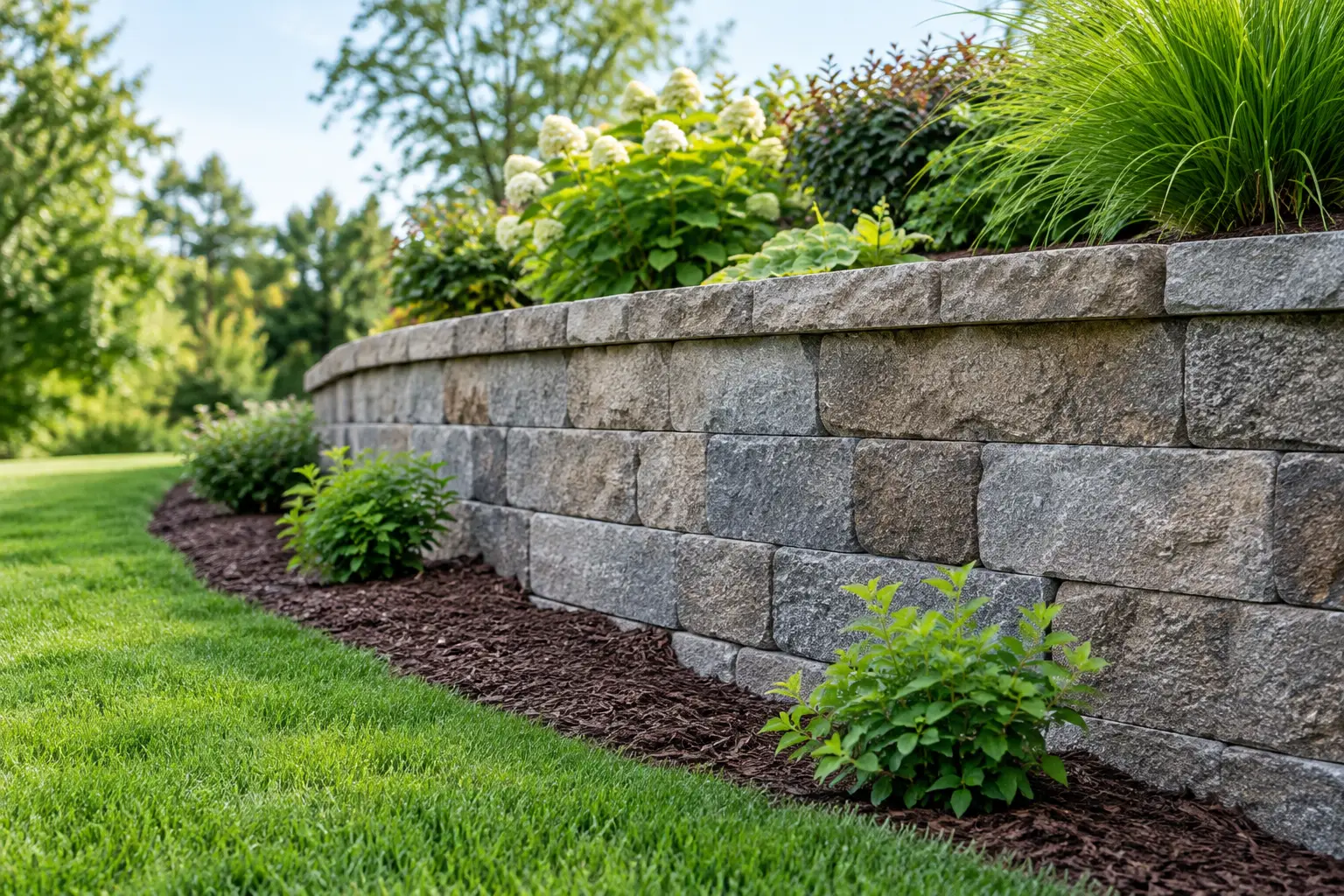
Interlocking segmental concrete block is among the most practical materials for structural retaining walls. These systems are manufactured specifically for wall construction and use engineered shapes, setback angles, and locking features to create stability. Many styles also accommodate geogrid reinforcement for taller walls or challenging soil conditions.
Today’s retaining wall blocks are far more visually refined than the plain gray units many people picture. Options range from clean, contemporary faces to textured blocks that resemble natural stone. They are available in neutral colors that coordinate well with paver patios, walkways, front entries, and landscape plantings.
Concrete block is an excellent choice when a wall needs to retain a meaningful grade change, create a level backyard, or support an expanded outdoor living area. It is also a reliable option for commercial properties where performance, consistent appearance, and maintainability matter.
Its limitation is aesthetic rather than structural. Although premium block products can look sophisticated, they do not offer the singular variation of real stone. Choosing a high-quality product and designing the wall with thoughtful caps, steps, columns, and surrounding plantings makes a considerable difference.
Poured concrete
Poured concrete retaining walls are often selected for highly structural applications, tight spaces, and modern architectural designs. Reinforced concrete can support substantial loads and may be appropriate where a wall sits near a driveway, building, pool area, or other feature that adds pressure behind it.
A poured wall can be faced with stone, veneer, brick, or stucco to better integrate it with the property. Left exposed, it can also suit a crisp contemporary landscape, particularly when paired with linear plantings, architectural lighting, and large-format paving.
Concrete is not automatically the best answer for every steep yard. It requires correct reinforcement, drainage, waterproofing where necessary, and carefully planned joints. Cracking can occur when these details are overlooked or when the wall does not account for soil movement. It is a strong material, but its success depends heavily on proper design and installation.
Brick
Brick brings a classic, tailored appearance to retaining walls, especially around historic homes, traditional front entries, and formal garden spaces. It can tie a landscape directly to a home’s existing brick facade, chimney, or walkway, creating a cohesive and intentional design.
For low decorative walls, raised planting beds, and patio borders, brick can be an elegant choice. It is less commonly used as the primary material for tall structural walls, particularly in sites with significant water pressure or changing grades. In those situations, brick may be best used as a facing material over a properly engineered structural wall.
New England winters demand careful attention to brick selection and mortar work. Exterior-rated brick and sound drainage details are essential to reduce the risk of spalling, cracking, and moisture damage.
Timber
Pressure-treated timber walls remain a budget-conscious option for modest grade changes. They can be installed quickly and have a simple, informal look that works in some backyard settings. For temporary improvements or low garden edges, timber may serve a practical purpose.
However, wood has a shorter expected service life than stone, concrete block, or reinforced concrete. Even pressure-treated materials are exposed to moisture, insects, soil contact, and gradual deterioration. Timber walls can also feel out of place beside a high-end patio or a carefully designed front landscape.
For properties where long-term appearance and low maintenance are priorities, most homeowners are better served by masonry or natural stone. Timber is best reserved for projects where upfront cost is the leading concern and the wall is relatively small.
Match the Material to the Project
A retaining wall should be chosen as part of the larger landscape plan, not as an isolated feature. Natural stone may be ideal for a front-yard wall that defines the entry and elevates curb appeal. Segmental concrete block may be the better fit for terracing a sloped backyard into usable lawn, planting, and patio areas. Poured concrete may make sense where structural demands are high, then receive a stone veneer for a more finished presentation.
Think beyond the wall itself. Caps create a comfortable seat wall around a patio. Integrated steps can make a slope safer and easier to navigate. Low-voltage lighting can highlight stone texture and improve evening visibility. Plantings soften the hardscape while helping the wall feel established rather than newly built.
For drainage-focused projects, the wall may also need to work with grading, catch basins, dry wells, or other stormwater-management solutions. This coordinated approach is especially valuable on properties where runoff has caused soggy lawns, erosion, or water near the foundation.
Installation Quality Matters as Much as Material
Even the finest stone or most advanced block system can fail if the base is shallow, the soil is not compacted, or water has nowhere to go. A well-built retaining wall starts below grade with excavation, base stone, compaction, and proper leveling. It continues behind the wall with drainage aggregate and, when needed, reinforced geogrid layers that extend into the slope.
The visible finish deserves equal attention. Straight lines, consistent joints, clean caps, carefully placed corners, and smooth transitions into steps or walkways separate a wall that merely functions from one that elevates the entire property. Experienced installation also helps avoid common issues such as leaning, bulging, settling, and displaced caps after winter.
A wall that changes the grade near a home, supports a driveway, or exceeds a modest height should be evaluated carefully before work begins. Site conditions, local requirements, utility locations, and drainage patterns all influence the right construction method.
The right retaining wall material should make your property more usable, more attractive, and easier to care for through every season. When the wall is designed around both the terrain and the life you want to enjoy outdoors, it becomes more than a solution for a slope – it becomes a lasting part of your outdoor sanctuary.