A Massachusetts snowstorm does not wait for a convenient time. Overnight accumulation can bury walkways before the first employee arrives, turn a front entry into a slip hazard, and make a carefully maintained property look neglected by morning. Professional snow removal is not simply about clearing pavement. It is about protecting safe access, preserving curb appeal, and keeping daily life moving when winter weather has other plans.
For homeowners, property managers, and small commercial properties across Greater Boston and the North Shore, the best approach starts before the first snowflake falls. A clear plan, a knowledgeable local crew, and attention to the details around each property make winter maintenance more dependable and far less stressful.
Snow Removal Is a Property-Care Service
Snow management is often viewed as an emergency response. In reality, it works best as a planned extension of year-round property care. Driveways, parking areas, front walks, stairs, loading zones, and sidewalks each require a different approach. A plow may efficiently clear a large paved area, but it cannot replace the careful hand work needed at an entrance, along a narrow path, or beside delicate landscape features.
The goal is not to scrape every surface aggressively. The goal is to create safe, accessible routes while treating the property with care. That means identifying pavement edges, drainage structures, curbing, mailbox locations, stone walls, landscape lighting, and areas where snow can be piled without creating visibility or runoff problems.
On the North Shore, winter conditions can change quickly from dry powder to heavy, wet snow or freezing rain. The response that works for a light overnight snowfall may not be appropriate after a coastal storm. Dependable service accounts for the forecast, site conditions, timing, and the way people use the property.
A Better Winter Plan Starts Before the Storm
The most effective snow service begins with a site review. Before winter, a professional team should understand where vehicles enter and exit, which doors need clear access, where pedestrians walk, and where snow storage will cause the fewest problems. This preparation helps prevent a common frustration: a cleared driveway with snow blocking the walkway or a large pile that reduces sightlines near the street.
For commercial and multi-use properties, priorities may include early access for staff, customer parking, ADA-conscious walkways, fire exits, and trash or delivery areas. Residential priorities are often more personal: a safe route from the driveway to the front door, clear steps for family and visitors, and access for service providers or emergency vehicles.
Snow stakes are a small but valuable part of this preparation. They mark driveway borders, planting beds, tight turns, hydrants, and other features that disappear under snowfall. Proper marking helps reduce the risk of damaged lawn edges, broken shrubs, displaced stone, and plow contact with hardscape elements.
Plowing, Shoveling, and Ice Control Each Have a Role
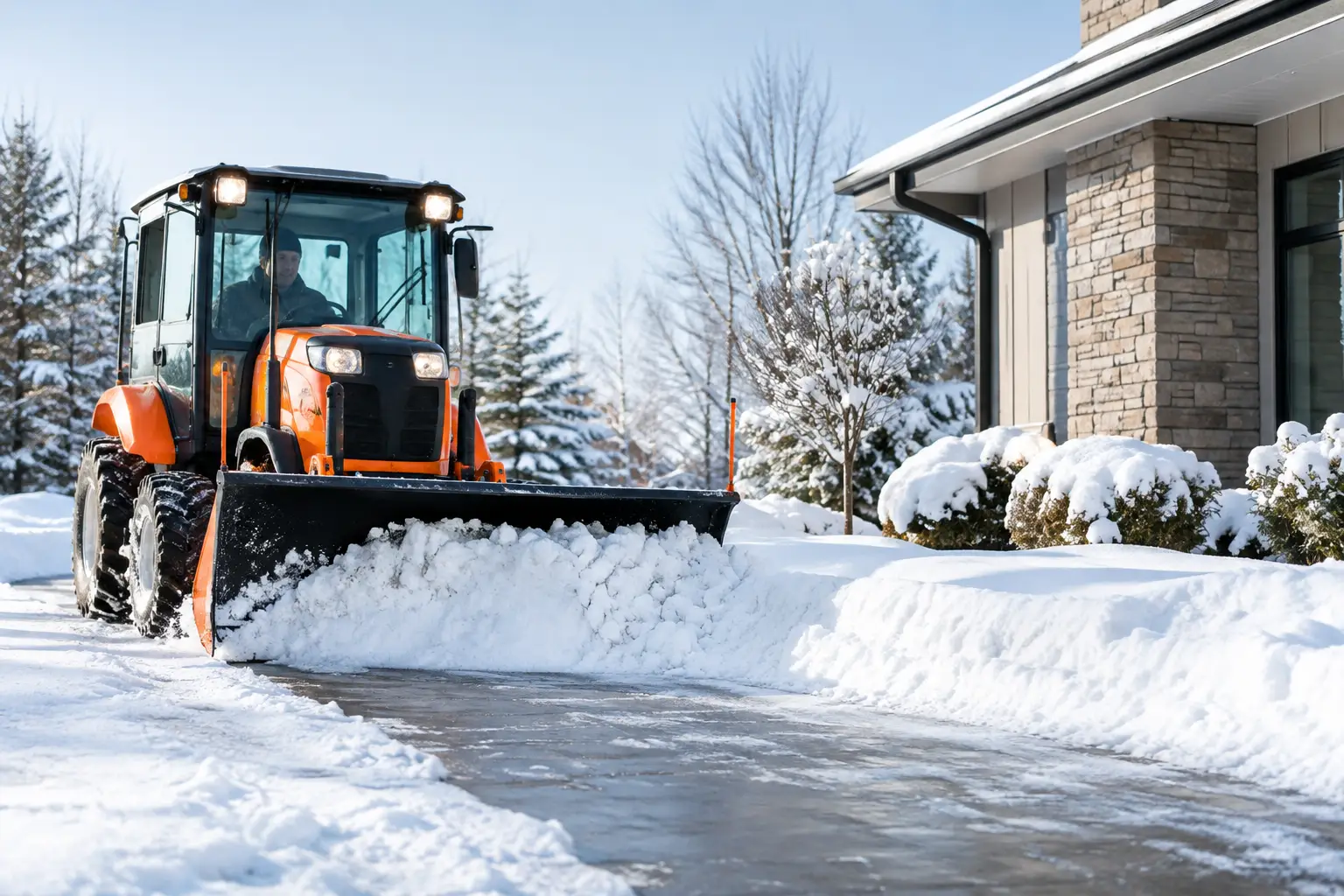
A complete winter service plan combines methods rather than relying on one solution. Plowing is efficient for driveways, parking lots, and broad paved areas. It restores vehicle access quickly, especially when service begins during a storm rather than waiting for deep accumulation.
Shoveling and snow blowing are essential around entrances, stairs, narrow side walks, ramps, and other spaces where equipment cannot operate safely. These areas deserve particular attention because they are where slips and falls are most likely to happen. A property can have a perfectly plowed parking area and still be unsafe if the route to the door is untreated.
Ice control addresses the hazard that remains after snow is moved. Refreezing runoff, shaded pavement, compacted snow, and freezing rain can all create slippery conditions long after the plow has left. Salt and deicing materials should be applied thoughtfully. Too little may leave hazardous ice behind, while excessive application can affect surrounding plant material, concrete, pavers, and nearby waterways.
The right material depends on the temperature, the surface, and the site. Standard rock salt can be effective in many conditions, but it has limits in extreme cold and may not be the best choice near sensitive plantings or high-traffic pedestrian areas. A professional provider can select materials and application rates that balance traction, surface protection, and responsible use.
Snow Placement Matters More Than Most People Realize
Where snow goes is just as important as where it is removed. Piling snow too close to a driveway entrance can make it difficult to see approaching vehicles. Blocking a catch basin or drainage swale can contribute to pooling when temperatures rise. Pushing snow onto public roads or sidewalks can create hazards and may violate local regulations.
Snow piles also affect the appearance and condition of a property. Large piles placed carelessly can smother lawn areas, damage shrubs, strain low fencing, and leave behind an unsightly mess in early spring. On properties with patios, retaining walls, decorative planting beds, or landscape lighting, snow placement should protect the features that make the landscape special.
This is where a coordinated outdoor-property contractor offers a practical advantage. A team familiar with the layout, drainage patterns, hardscape materials, and landscape investments on site can make informed decisions throughout the winter. That same knowledge supports a smoother spring cleanup once the snow recedes.
What Reliable Service Looks Like During a Storm
Reliability is more than arriving with a plow after a storm ends. It means monitoring weather conditions, deploying equipment at the appropriate time, and returning as needed when accumulation continues or temperatures change. For many commercial clients, service timing is tied to operating hours. For homeowners, it may be tied to morning departures, medical needs, or the simple reassurance of knowing the property is accessible.
Communication also matters. Winter weather is unpredictable, and no provider can control how quickly snow falls or when municipal plows pass through. A dependable contractor sets clear expectations about trigger depths, service areas, return visits, and ice-treatment practices. If a town plow deposits snow across the end of a driveway after initial service, that may require a separate return visit depending on the agreement.
The best arrangements are specific without becoming rigid. A small residential driveway may need a straightforward seasonal plan. A busy office, retail site, condominium property, or medical-related facility may need more frequent monitoring and a more detailed service schedule. The scope should reflect how the property functions, not just its square footage.
Protecting Hardscapes and Landscapes Through Winter
Winter equipment can be hard on a property when operated without care. Plow blades set too low can catch paver edges, scrape asphalt, or disturb gravel. Heavy piles can press against fences and walls. Repeated salt exposure can affect turf, evergreens, and planted beds near walkways.
Good practices reduce these risks. Equipment should be suited to the site, operators should know its boundaries, and snow should be pushed with an understanding of what lies beneath and beside it. Property owners can help by keeping cars, bins, hoses, outdoor furniture, and portable basketball hoops out of service areas before a storm.
It is also wise to inspect the property after winter. As snow melts, look for pavement movement, damaged edging, drainage issues, or plant material stressed by salt. Addressing these items early makes spring maintenance more efficient and helps preserve the long-term beauty of the landscape.
Choosing a Snow Removal Partner
When comparing snow service providers, look beyond the lowest per-storm price. Ask how they monitor storms, what areas are included, whether hand clearing and ice control are available, and how they protect landscape and hardscape features. Confirm that the contractor is equipped and insured for the work, and that the service agreement clearly explains trigger depths, timing, and billing.
Local experience is especially valuable in Massachusetts. Dense neighborhoods, narrow driveways, steep grades, coastal weather patterns, and frequent freeze-thaw cycles all create site-specific challenges. A provider should be prepared to adapt, not apply the same approach to every property.
M&M Landscaping brings this same detail-conscious approach to winter care that it applies to landscape maintenance, hardscaping, and outdoor construction. The focus is simple: keep your property safe, accessible, and well cared for through every storm without losing sight of the landscape waiting beneath the snow.
A winter service plan should give you confidence before the forecast turns. With clear priorities, thoughtful snow placement, and responsive ice control, your property can remain ready for the people who depend on it all season long.