A driveway should guide guests to your property, not guide stormwater toward your garage, foundation, or front walk. The best driveway drainage solutions do more than remove standing water after a storm. They protect hardscape investments, reduce winter ice hazards, preserve nearby planting beds, and help your entire property look cared for through New England’s changing seasons.
In Greater Boston and along the North Shore, drainage design must account for more than an occasional downpour. Freeze-thaw cycles, compacted soils, sloped lots, snowmelt, and heavy summer rain can all expose weaknesses in an aging driveway. The right solution depends on where the water starts, where it naturally wants to travel, and where it can be directed safely.
Start With the Source of the Water
Before installing a drain, identify what is feeding the problem. Water may be flowing down the driveway from the street, shedding off a roof, running from a neighboring slope, or collecting at a low point created by settlement. These sources require different approaches, and treating only the visible puddle can leave the underlying issue unresolved.
A careful site assessment looks at driveway pitch, adjacent grades, downspout discharge, soil conditions, and the relationship between pavement and nearby structures. Even a beautifully installed paver driveway can underperform if runoff has no planned route away from the home.
The goal is controlled movement. Water should be collected before it reaches vulnerable areas, conveyed through a durable system, and released at an appropriate location on the property. That may be a landscaped infiltration area, a dry well, a swale, or another approved discharge point suited to the site.
Best Driveway Drainage Solutions for Common Problems
Channel drains at garage doors and low points
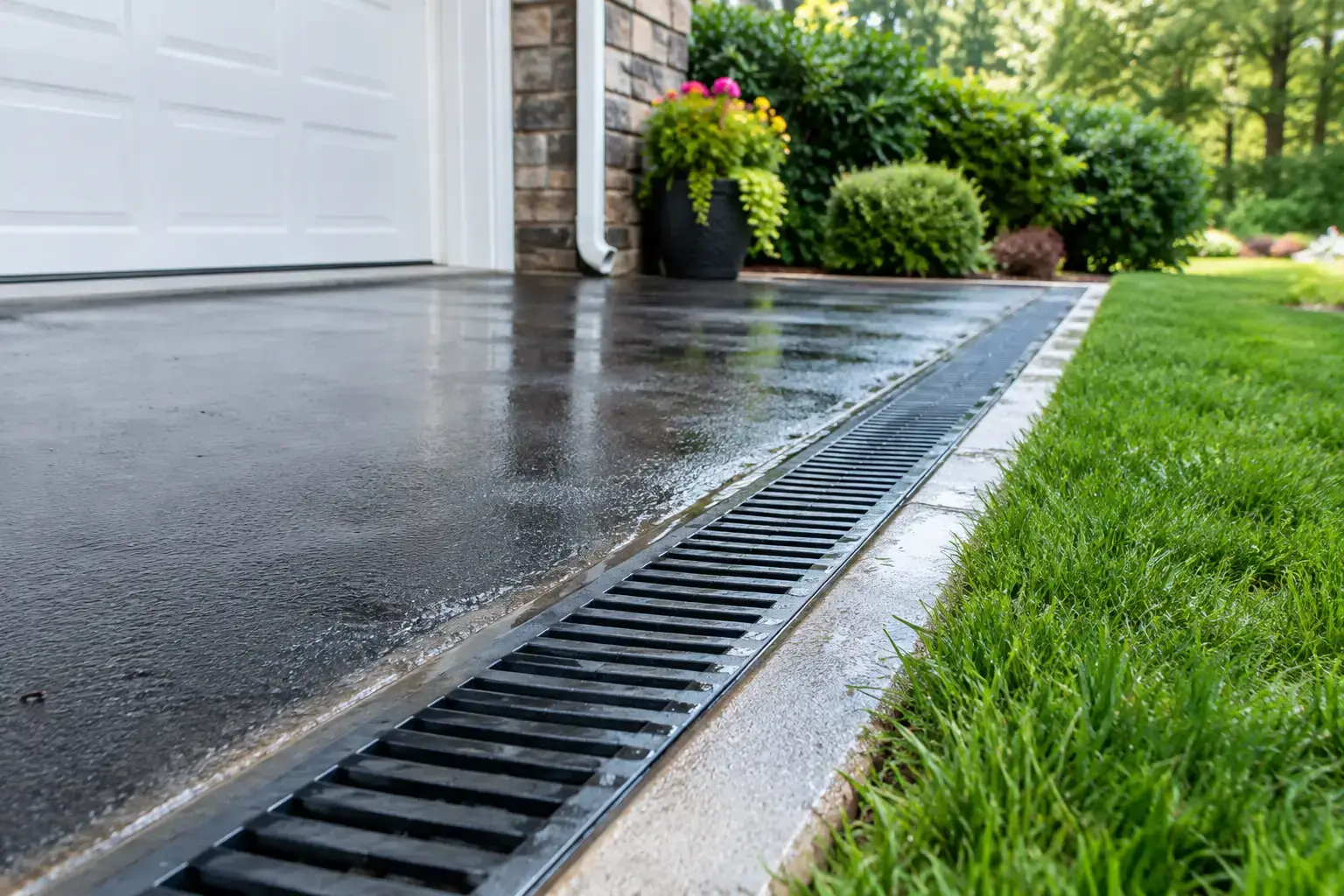
A channel drain, also called a trench drain, is often the most effective choice where water runs toward a garage, basement entry, or low driveway transition. It is a long, narrow drain set flush with the pavement surface. A grated top captures sheet flow, while a buried pipe carries water away from the collection point.
This solution is especially valuable at the bottom of a sloped driveway or directly in front of a garage door, where even a small amount of ponding can create a serious risk. During winter, water that remains in these areas can freeze into slick, hazardous ice.
Installation details matter. The channel must be set at the correct elevation, connected to properly sized drainage pipe, and finished with a grate that can withstand vehicle traffic. Decorative grates are available, but durability and serviceability should come first. A drain that looks refined and can be cleaned easily will serve the property far better than one chosen on appearance alone.
Regrading and resurfacing for positive drainage
Sometimes the most durable drainage system is not a drain at all. If the driveway has settled or was originally installed with an improper pitch, regrading may be the answer. The driveway surface should generally slope away from the house and toward a planned collection or dispersal area.
For paved or paver driveways, correcting grade can involve removing and rebuilding sections of the base, resetting pavers, or resurfacing asphalt. This is more involved than adding a surface drain, but it can solve broad drainage issues that no single drain could reasonably handle.
The trade-off is cost and scope. Regrading is often the right long-term investment when water crosses a large section of pavement or consistently flows toward the structure. It also creates an opportunity to improve transitions to walkways, planting beds, and patios so the finished landscape feels intentional rather than patched together.
French drains for water below the surface
A French drain is designed to intercept groundwater and subsurface flow. It typically uses a perforated pipe surrounded by washed stone and wrapped in filter fabric. Water enters through the stone, reaches the pipe, and is carried toward a suitable outlet.
French drains are useful when water seeps from a hillside, saturates the edge of a driveway, or softens lawn and planting areas beside the pavement. They are not usually the first choice for fast-moving surface runoff from a steep driveway. In that situation, a channel drain or swale may be needed to capture water at the surface before it overwhelms the ground.
When properly installed, a French drain can protect driveway edges from washout and help keep nearby soil stable. It is often integrated with retaining walls, foundation drainage, or new landscape construction for a coordinated result.
Dry wells for on-site stormwater storage
A dry well is an underground structure that receives runoff and lets it gradually infiltrate into surrounding soil. It can be a practical option when a property has enough suitable soil and space but no convenient surface outlet.
Dry wells work well with roof leaders, channel drains, and other collection systems. They can reduce visible runoff and keep water from spilling across walkways or into planting beds. However, they are not appropriate for every property. High groundwater, poor-draining clay soils, ledge, and limited setbacks from foundations can all affect whether a dry well is feasible.
A professional drainage plan should confirm that the system can accept the expected volume of water. An undersized dry well may appear to work during light rain but overflow during the storms that matter most.
Swales and landscaped drainage areas
A swale is a shallow, graded channel that guides water across a property at a controlled pace. Unlike a hard-edged trench, it can be shaped into the landscape and softened with turf, stone, or carefully selected plantings.
For homes with adequate yard space, swales can be a visually elegant way to move driveway runoff away from the house. They are particularly effective along the edge of a long driveway or between a driveway and a lawn. Stone-lined swales offer a more defined look and stand up well to concentrated flow, while planted swales can support a more natural landscape design.
This approach requires precise grading. A swale that is too flat will hold water, while one that is too steep can erode. The best installations balance drainage performance with the clean, polished appearance expected from a finished landscape.
Permeable pavers for lower runoff
Permeable pavers allow water to pass through joints and into a specially built stone base below. Rather than sending every drop across the driveway surface, the system stores and filters some rainfall beneath the pavement.
They can be an excellent choice for a new driveway, parking area, or expanded hardscape where runoff is a concern. Permeable pavers also deliver the visual refinement of a premium driveway while supporting responsible stormwater management.
They do require the right site conditions and ongoing care. Fine sediment can clog the joints over time, so sweeping and periodic maintenance are part of protecting performance. They may also need to be paired with overflow drainage for major storms or sites with poorly draining subsoil.
Protect the Details Around the Driveway
A driveway drainage project should consider more than the pavement itself. Downspouts should not empty directly onto the driveway or beside its edge, where concentrated water can undermine the base. Lawn grades should not direct runoff back toward the pavement, and planting beds should be edged and shaped to resist erosion.
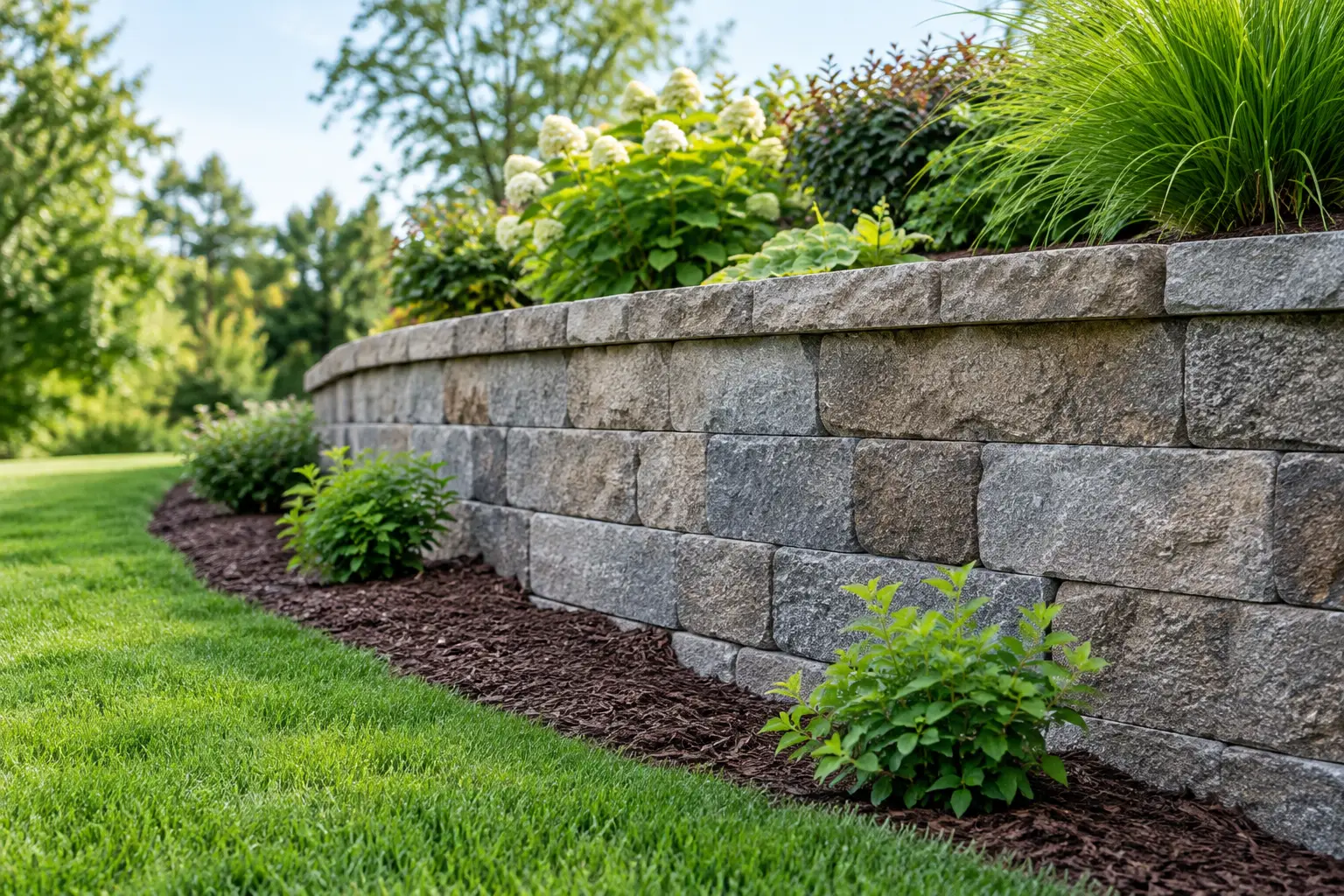
Retaining walls also deserve close attention. Water building up behind a wall can create pressure, staining, and long-term structural concerns. Proper stone backfill, drainage pipe, and outlet locations are essential whenever a wall supports a raised driveway or adjacent grade.
For commercial properties and multi-unit sites, drainage planning should also account for pedestrian routes, parking areas, plow operations, and ice-control needs. A system that keeps water off the pavement before a freeze can reduce both maintenance demands and liability concerns.
Plan for Massachusetts Winters
Snow removal changes the way driveway drainage systems perform. Drain grates must sit flush enough for plows and shovels to pass safely, while still allowing water to enter. Drainage outlets need protection from blockage by snow, leaves, or displaced mulch. In fall, clearing debris from grates, catch basins, and swales is a simple maintenance step that can prevent winter trouble.
Avoid relying on salt to solve recurring ice caused by poor drainage. De-icing materials can improve immediate safety, but they do not correct the water path. Repeated use may also affect nearby turf, shrubs, and hardscape surfaces. The more reliable approach is to remove the source of the ice through proper grading and drainage collection.
Build Drainage Into a Complete Property Plan
The strongest results come from treating drainage as part of the overall landscape, not as an afterthought. A new patio, walkway, retaining wall, planting bed, or driveway creates an opportunity to improve how water moves across the property. Coordinating these elements produces a cleaner finish and prevents the costly rework that can happen when drainage is addressed later.
M&M Landscaping designs and builds outdoor spaces with this full-property perspective, combining hardscape craftsmanship, planting expertise, and stormwater-management solutions for lasting performance. The right system may be nearly invisible once complete, but its value becomes clear during the next hard rain, spring thaw, or icy morning. A well-drained driveway protects the practical side of your property while preserving the welcoming, polished first impression that makes a home feel exceptional.