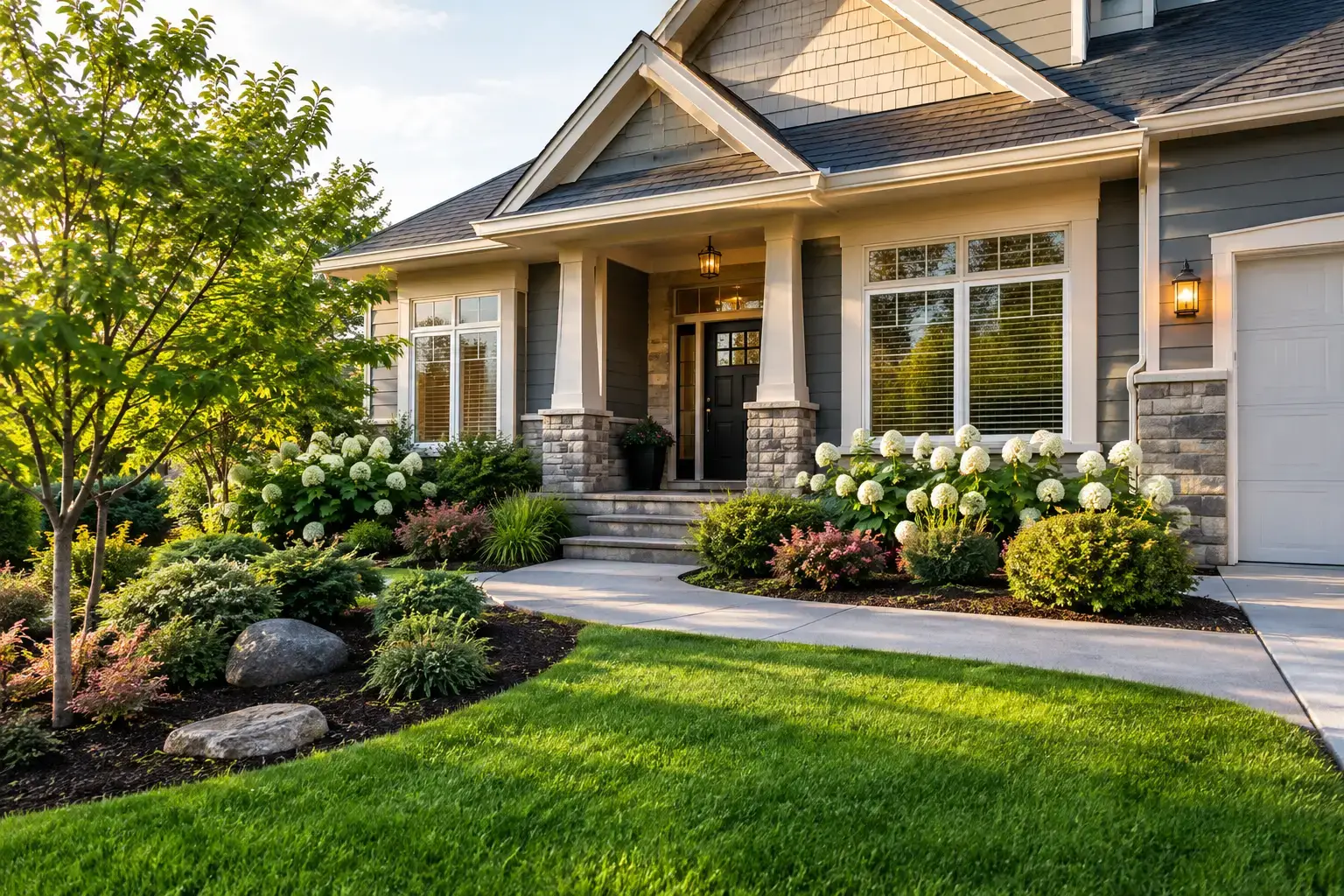
A cracked front walk, tired foundation shrubs, and bare lawn patches can make an otherwise well-kept home feel unfinished from the street. To improve curb appeal landscaping, focus on the elements people see and experience first: the approach to the door, the shape of planting beds, the condition of the lawn, and the details that keep the property looking cared for in every season.
For homeowners and property managers across Greater Boston and the North Shore, curb appeal is not simply decorative. It affects first impressions, daily pride of ownership, safety, drainage performance, and the long-term value of the property. The strongest results come from a coordinated plan, not a collection of disconnected upgrades.
Start With the View From the Street
Stand at the curb and look at the property as a visitor would. Notice where your eye goes first. A welcoming front entrance should be easy to identify, while walkways, plantings, and lawn areas should lead the eye toward it rather than compete for attention.
Begin by addressing the visual distractions. Overgrown shrubs that cover windows, uneven edges along the driveway, stained pavers, leaning fences, and neglected mulch beds can diminish even a beautiful home. Some of these issues call for maintenance, while others point to a larger construction need. A worn asphalt or concrete walkway, for example, may be safer and more attractive when replaced with a properly installed paver or natural-stone path.
Scale matters as much as style. Small plantings can disappear against a large colonial or commercial façade, while oversized evergreens may crowd a modest front yard. A thoughtful landscape design considers mature plant size, sightlines from the road, and the architecture of the building so the finished property feels balanced rather than overplanted.
Improve Curb Appeal Landscaping With a Clear Entry
The front approach does more than connect the driveway to the door. It establishes the experience of arriving home. If guests have to step around puddles, navigate loose material, or guess where the path begins, the entry is not working as well as it should.
A well-built walkway creates structure and permanence. Pavers offer flexibility in color, pattern, and shape, making them a strong choice for both traditional New England homes and more contemporary properties. Natural stone can deliver a more organic, timeless appearance. The best material depends on the architecture, budget, intended maintenance level, and the condition of the base below it.
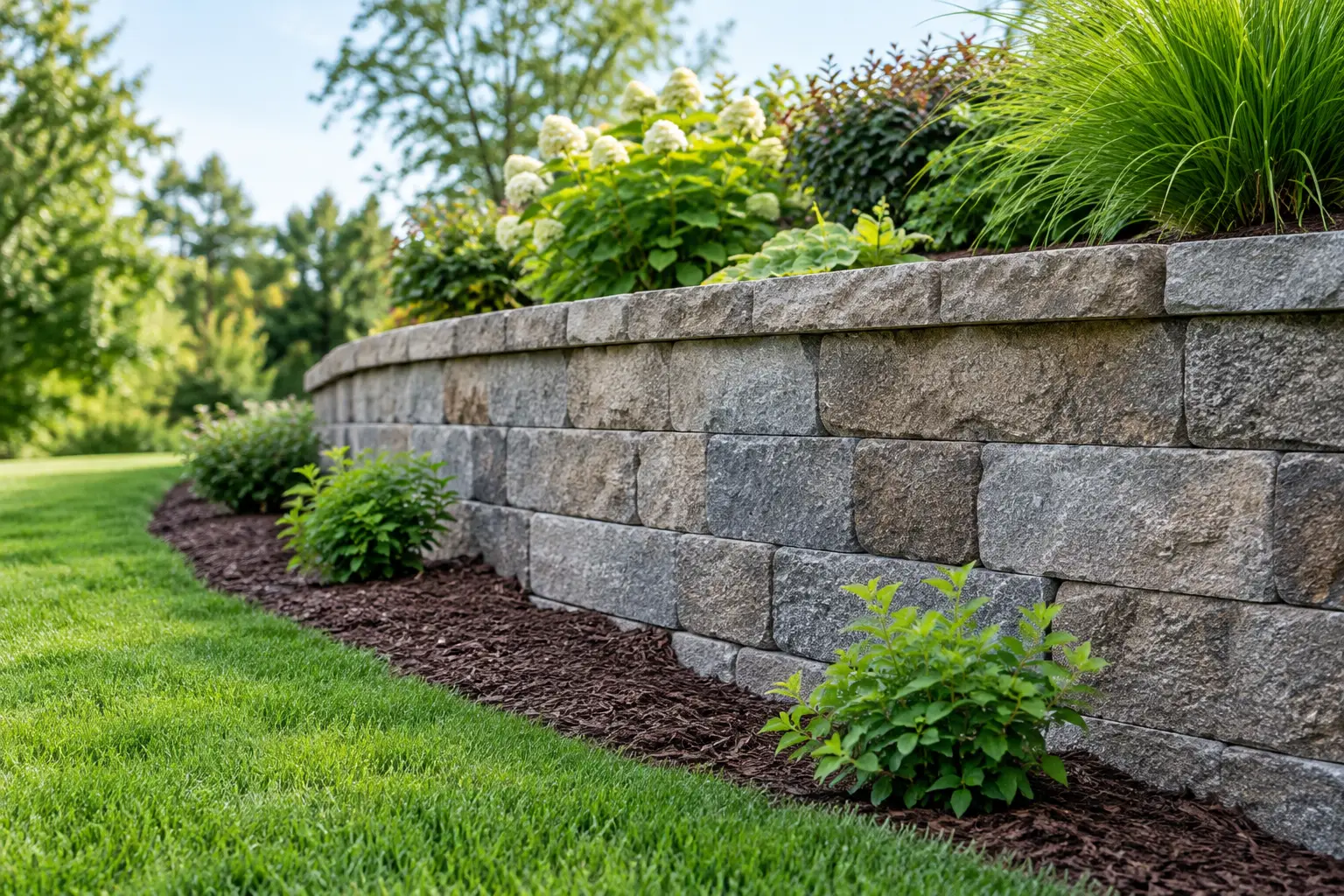
Do not overlook width and transitions. A narrow path may meet a basic functional need, but a wider walkway feels more generous and accommodates two people walking side by side. Steps should have consistent riser heights, stable landings, and defined edges. When the grade changes significantly, retaining or landscape walls can make the entry safer while creating useful planting opportunities.
Lighting adds another layer of refinement. Low-voltage path lights, gentle uplighting on specimen trees, and carefully placed entry fixtures make the property easier to navigate after dark. The goal is not to flood the yard with brightness. It is to define routes, reveal texture, and make the entrance feel secure and inviting.
Build Planting Beds for Structure and Seasonal Interest
Plantings are often the fastest way to refresh a front yard, but durable curb appeal requires more than adding a few flowering plants near the foundation. Beds need clean outlines, appropriate soil preparation, and a layered plant palette that looks good beyond a brief spring bloom.
Evergreen shrubs provide the framework, especially during a Massachusetts winter when deciduous plants have dropped their leaves. Perennials and flowering shrubs can add color and softer texture through spring and summer. Ornamental grasses, seed heads, and plants with interesting bark can extend visual interest into fall and winter.
Choose plants based on their actual growing conditions, not just their appearance at the garden center. Sun exposure, soil moisture, salt exposure near roads and driveways, deer pressure, and available space all influence long-term performance. A plant that is poorly matched to its location may look appealing for one season, then become a recurring replacement expense.
Mulch is a finishing material, not a solution for weak plant design. A fresh, evenly installed mulch layer helps conserve moisture and gives beds a polished appearance, but it should not be piled against tree trunks or shrub stems. Crisp bed edging, healthy plant spacing, and proper pruning do more to create an immaculate look than excessive mulch ever will.
Restore the Lawn Without Overlooking the Cause
A green lawn creates visual continuity between the house, driveway, and planting beds. Yet a lawn that repeatedly thins out may be signaling a larger issue such as poor soil, shade, compacted ground, improper mowing, or water runoff.
Before reseeding or installing new sod, assess why the existing turf has struggled. Areas beneath dense trees may need a shade-tolerant seed mix or a different landscape treatment altogether. Low spots may require grading and drainage improvements. High-traffic routes from the driveway to the house can benefit from a defined path rather than repeated attempts to grow grass where it is constantly worn away.
Routine lawn care protects the investment after installation. Seasonal cleanups, mowing practices suited to the time of year, fertilization when appropriate, and timely leaf removal all help preserve a clean, healthy appearance. For commercial properties, consistent maintenance also tells customers and tenants that the site is carefully managed.
Treat Drainage as Part of the Design
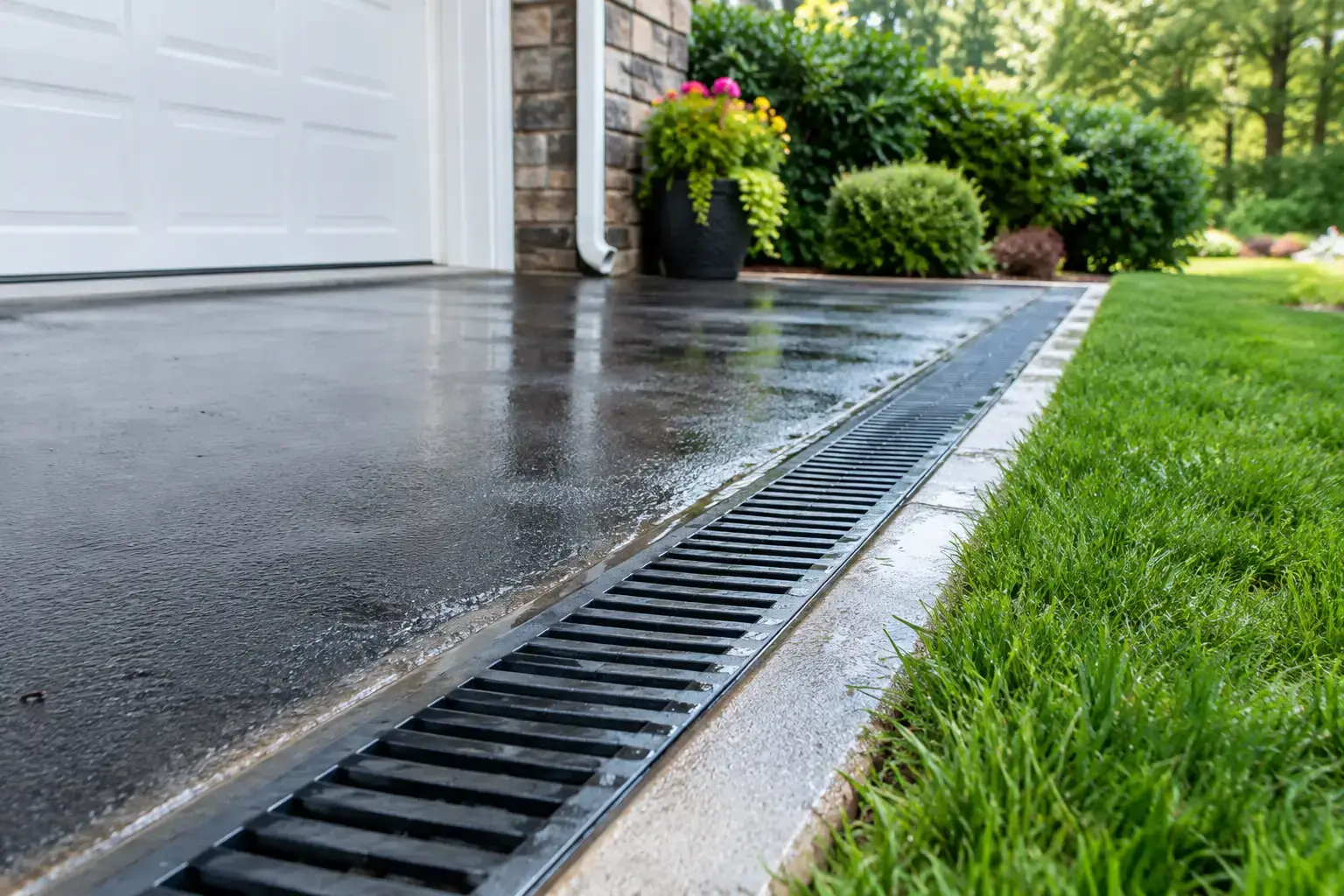
Water management is one of the least glamorous aspects of curb appeal, and one of the most consequential. Standing water near a front entry, erosion in planting beds, and runoff crossing a walkway can quickly undermine both appearance and safety.
Effective drainage solutions should move water away from foundations, hardscape surfaces, and areas where it will damage turf or wash out mulch. Depending on the site, the solution may involve regrading, drainage swales, catch basins, dry wells, or permeable paving. The correct approach depends on the property’s slope, soil conditions, roof runoff, and municipal requirements.
This is where cutting corners tends to become expensive. A beautiful new patio, walkway, or landscape wall must be built on a sound base with water movement in mind. Otherwise, frost heave, settling, and drainage failures can compromise the finished work. Quality construction creates curb appeal that holds up through heavy rain, snowmelt, and New England freeze-thaw cycles.
Maintain the Details That Protect the Transformation
Curb appeal is rarely lost all at once. More often, it fades through small details: shrubs growing past windows, leaves collecting along foundation beds, lawn edges blurring into mulch, and winter debris remaining too long in spring.
A seasonal maintenance plan keeps the property aligned with the original vision. Spring cleanup prepares beds and lawn areas for the growing season. Pruning maintains plant shape and removes damaged growth. Fall cleanup prevents heavy leaf cover from smothering turf and planting beds. In winter, dependable snow plowing and ice control protect access to the property and preserve a professional appearance when conditions are at their toughest.
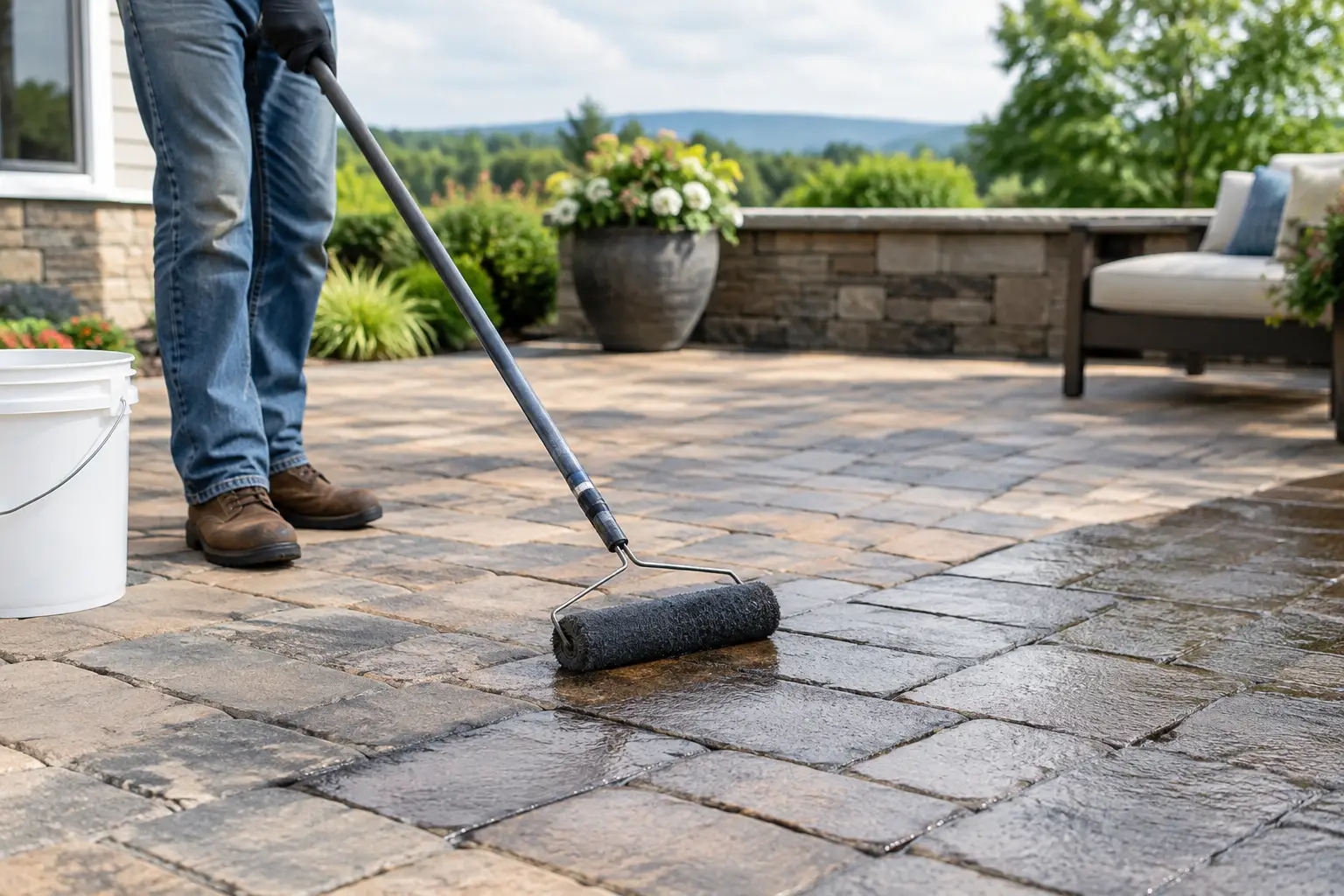
Hardscape features deserve care as well. Paver sealing, when appropriate for the material and installation, can refresh color and help protect surfaces from stains and weather exposure. Fence repairs, wall inspections, and prompt attention to settling or drainage changes prevent minor concerns from becoming major projects.
Choose Improvements That Fit the Property
Not every curb appeal project needs a complete front-yard renovation. For one property, a new walkway, refreshed foundation planting, and landscape lighting may create a dramatic shift. For another, the priority may be correcting drainage, rebuilding failed steps, or replacing an aging retaining wall before cosmetic details are added.
The most successful projects connect design and maintenance from the start. M&M Landscaping approaches outdoor properties as complete environments, pairing precise construction with ongoing care so plantings, lawns, hardscapes, and seasonal needs work together. That coordinated approach helps avoid the common problem of investing in a transformation without a plan to protect it.
A front landscape should welcome people in, perform reliably, and continue looking intentional long after installation day. Start with the feature causing the greatest visual or functional concern, then build outward with materials and plantings that will earn their place on the property year after year.