A driveway should lead guests comfortably to your home, not send every heavy rainstorm toward the garage, foundation, sidewalk, or neighboring property. To reduce driveway runoff effectively, the solution has to account for where water begins, how quickly it moves across the surface, and where it can safely soak in or drain away. For Greater Boston and North Shore properties, that often means designing for compacted soils, tight lot lines, winter freeze-thaw cycles, and intense summer rain.
Runoff is more than a curb-appeal concern. Water that repeatedly travels across asphalt, concrete, or pavers can erode planting beds, wash gravel into the street, create slippery winter conditions, and place unnecessary pressure on foundations and drainage systems. A well-planned driveway drainage strategy protects the property while preserving the clean, finished appearance homeowners expect from a professionally designed landscape.
Why Driveway Runoff Becomes a Property Problem
Driveways are hard, nonporous surfaces. Instead of absorbing rainfall, they direct it downhill. Even a modestly sloped driveway can collect water from the roof, lawn, and adjacent paved areas, turning one low spot into a concentrated flow path.
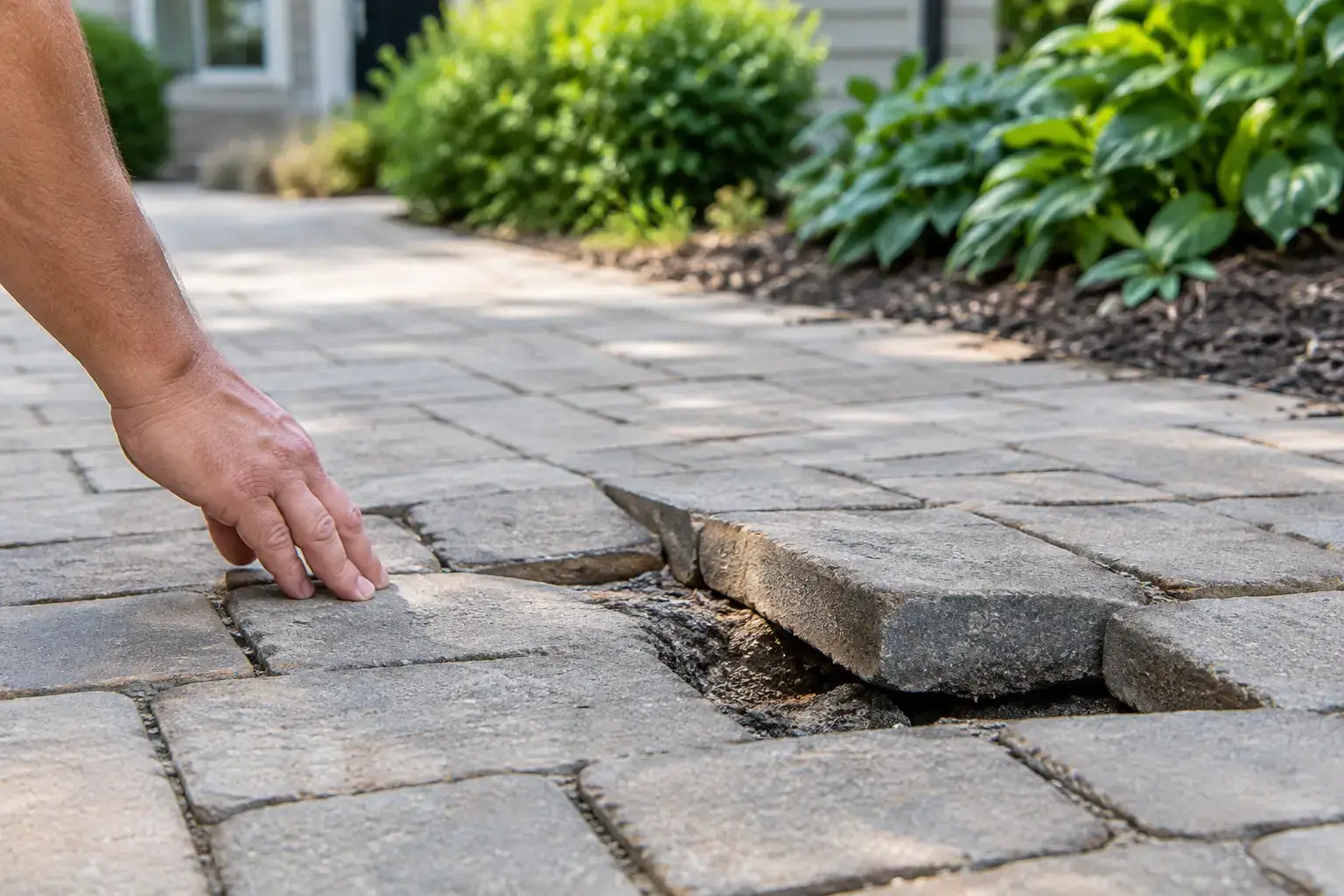
On older Massachusetts properties, the issue is often made worse by years of resurfacing, settling, soil compaction, or landscape changes that altered the original grade. A new patio, retaining wall, or planting bed may look beautiful but can unintentionally interrupt the way water once moved through the yard. During winter, trapped water can freeze, heave paving materials, and create hazardous ice near entrances and walkways.
The objective is not always to eliminate water from the site. Rain needs a place to go. The goal is to slow it down, spread it out, capture it where appropriate, and move it away from buildings and high-traffic areas without creating a new problem elsewhere.
Start With Grading Before Adding Drains
The most durable drainage solutions begin below the surface. Proper grading establishes a clear route for water before a drain, channel, or catch basin is installed. When the driveway, lawn, and landscape beds work together, the property needs fewer visible drainage components and performs more naturally during a storm.
A driveway should generally slope away from the garage and home, but the right slope depends on the property layout. A steep grade can move water away quickly, yet it may also accelerate erosion or send runoff toward a sidewalk. A driveway that is nearly flat may allow water to pond. The best approach is a controlled pitch that guides water toward a stable collection area, planted swale, drainage system, or permeable zone.
Regrading can be especially valuable where water crosses the driveway from an uphill lawn or neighboring elevation. Rather than letting that water travel over pavement, a shallow swale or carefully shaped landscape bed can intercept it first. Stone edging, low retaining walls, and layered planting can make this functional work feel intentional and refined rather than purely utilitarian.
Watch the Garage Threshold and Side Yard
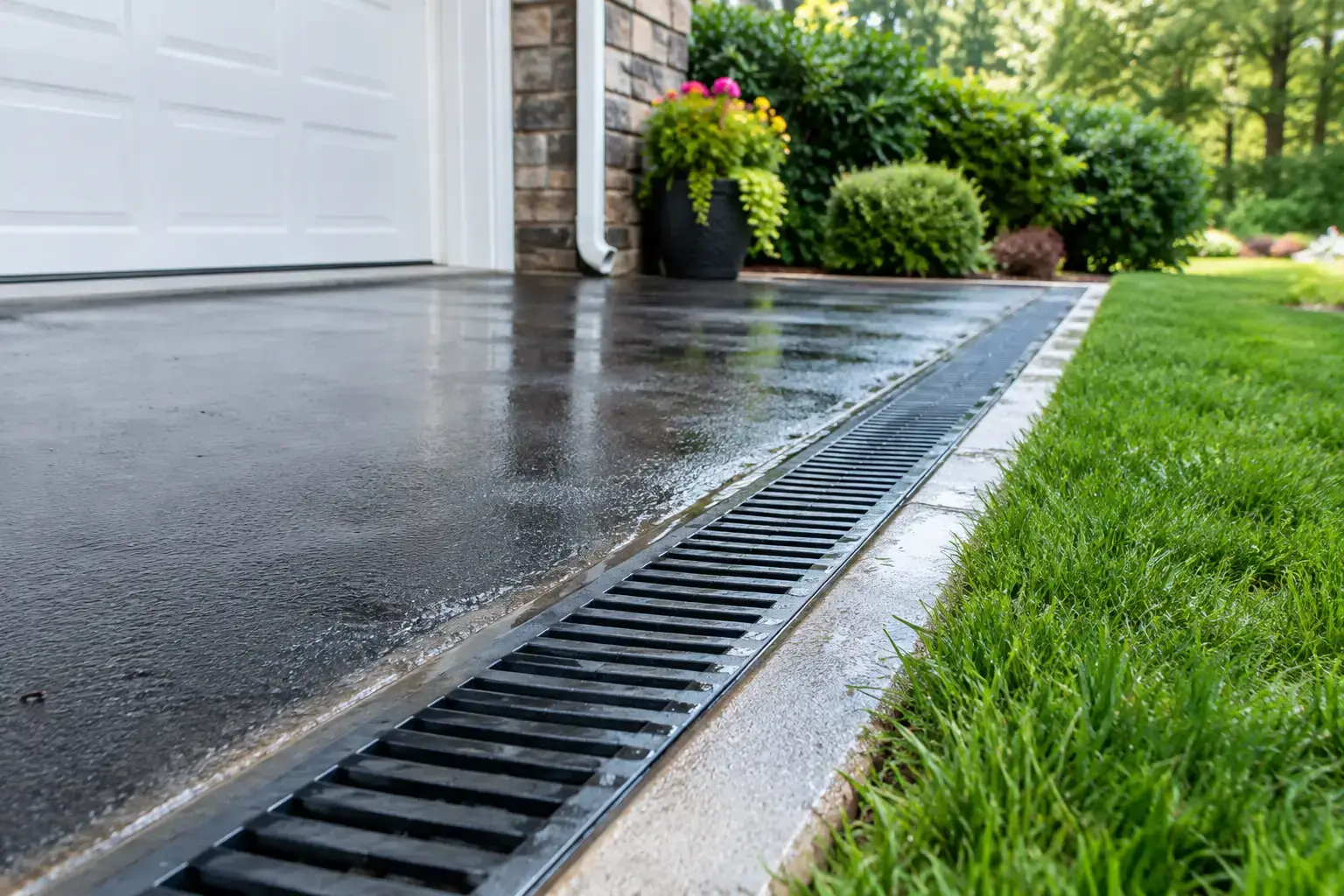
The lowest point near a garage door deserves close attention. If water pools there after rain or snowmelt, the surface may need to be re-pitched, or a properly sized channel drain may be necessary. A channel drain can collect runoff before it reaches the garage, but it must discharge to a suitable location. Installing one without a sound outlet simply relocates the standing water problem.
Side yards also matter. Water redirected from a driveway should never be sent toward a narrow side passage where it can sit against the foundation, overwhelm a gate area, or freeze in winter. A full site review considers the entire drainage path, not just the visible puddle.
Choose Permeable Surfaces Where They Make Sense
Replacing an entire driveway is not always required, but permeable paving can significantly reduce surface runoff in the right setting. Permeable pavers, porous asphalt, and stabilized gravel systems allow water to pass through the surface into a specially prepared stone base below. That base temporarily stores water and lets it infiltrate gradually into the soil or connect to an engineered drainage system.
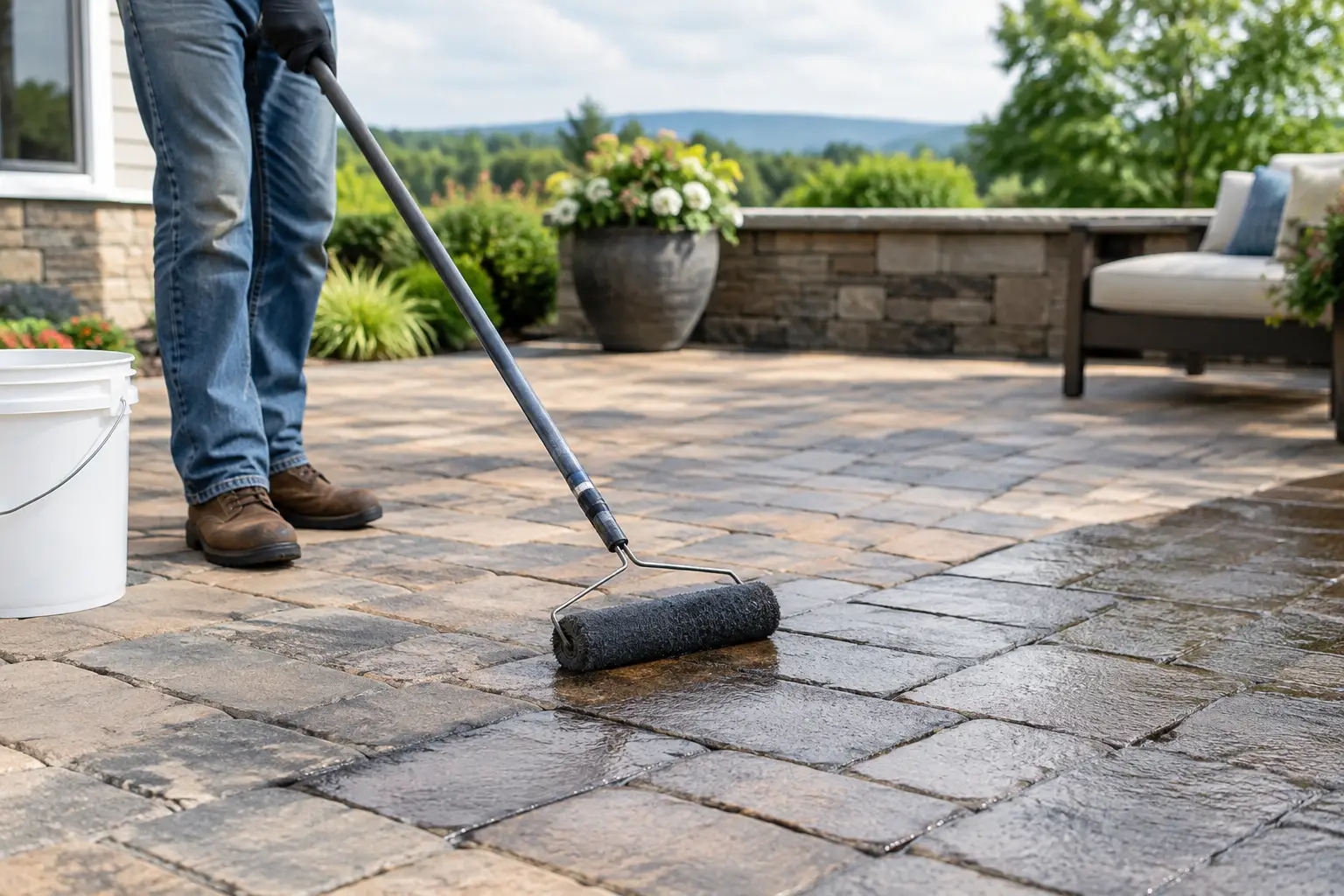
Permeable pavers are often a strong choice for driveway extensions, parking areas, walkways, and decorative aprons. They offer a tailored appearance and can complement patios, landscape walls, and front-entry hardscaping. Their performance depends on correct excavation, base depth, edge restraint, and maintenance. The paver itself is only one part of the system.
Porous asphalt can provide a more traditional driveway appearance while improving drainage. It may be appropriate for certain larger drive areas, though soil conditions, anticipated traffic, and winter maintenance practices should all be evaluated. Gravel is another option for lower-traffic areas, but it requires careful containment and periodic replenishment to avoid migration into lawns and roadways.
Permeable materials are not the right answer on every property. Sites with poorly draining native soil, high groundwater, steep slopes, or limited space may need underdrains, overflow routes, or a different stormwater approach. A thoughtful design matches the material to the site instead of forcing a single solution everywhere.
Add Drainage Where Water Naturally Collects
When grading alone cannot control runoff, drainage components can provide reliable relief. The right system depends on the volume of water, available discharge areas, soil conditions, and the location of utilities, septic systems, foundations, and property lines.
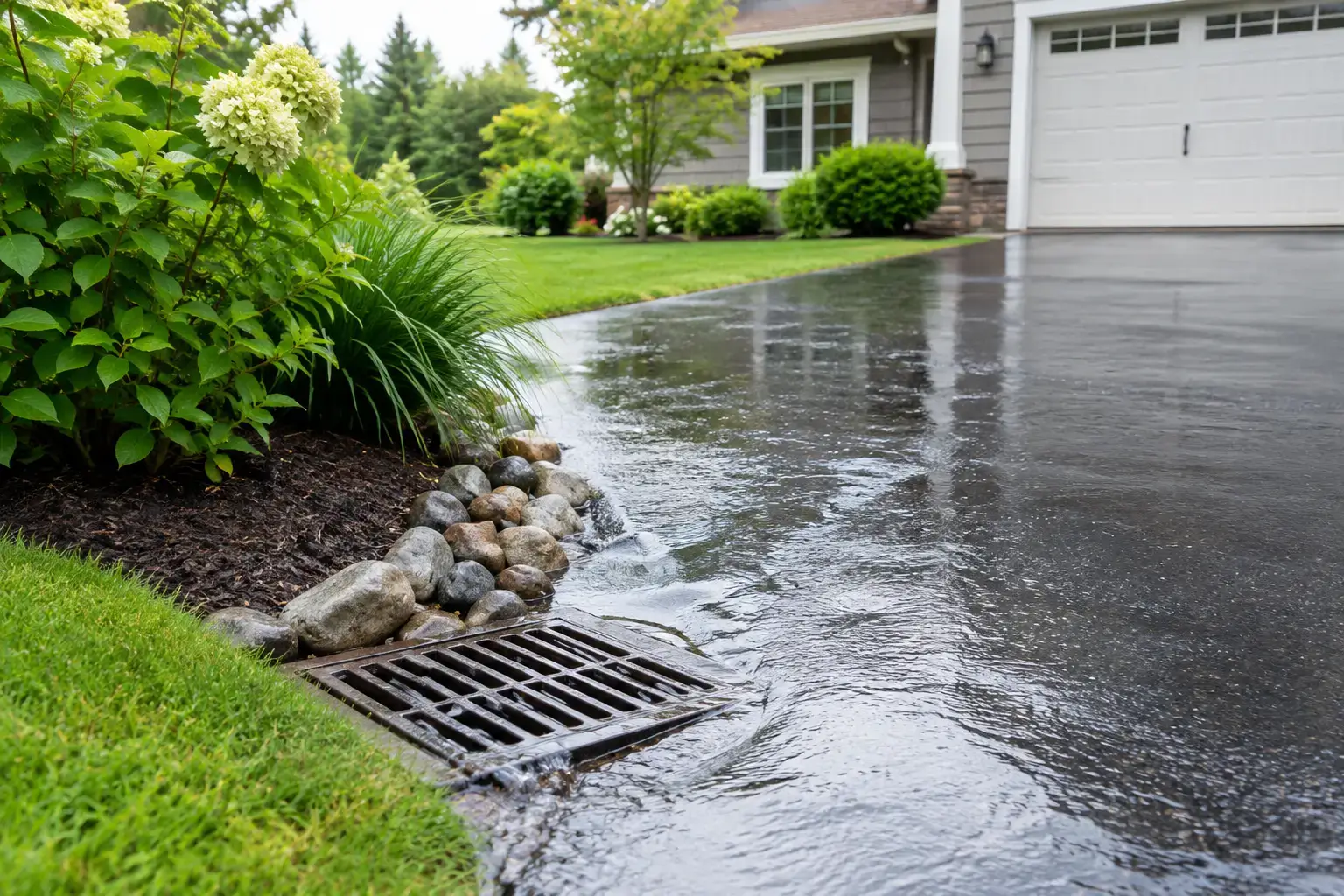
A trench drain is often used across the front of a garage or at the base of a sloped driveway. Catch basins can collect water at low points and connect to buried solid pipe. In some cases, a dry well or infiltration chamber can hold runoff underground and allow it to disperse slowly. In other cases, water may need to be conveyed to a designated drainage area through an approved system.
Drainage should be sized for more than the average rain shower. Massachusetts storms can produce sudden, heavy rainfall, and snowmelt may arrive when the ground is still frozen. Small drains can clog with sand, leaves, and winter debris, so access for cleaning is part of good design. Grates should sit flush with paving, remain stable under vehicle traffic, and be selected for the expected load.
Use Planting Areas to Slow and Filter Water
Planting is one of the most attractive ways to manage runoff. A strategically placed rain garden, vegetated swale, or expanded landscape bed can receive water from a driveway, slow its movement, and filter sediment before it reaches a drain or lower part of the property.
The plants must tolerate both wet conditions and dry stretches. Native and regionally adapted grasses, perennials, shrubs, and small trees can create seasonal color while supporting better drainage. A well-composed planting area also softens the visual impact of a driveway, helping the front or side yard feel more like an outdoor sanctuary than a parking surface.
Mulch alone is not a drainage fix. While it helps protect soil and reduces splashing, a bed that is flat, compacted, or edged in a way that traps water will still struggle. The soil profile, bed elevation, and overflow route all need to be considered. In some properties, decorative river stone can be used as a dry creek feature to carry occasional flows, but it should be built with a stable base and a destination for the water.
Protect the Work With Seasonal Maintenance
A drainage improvement is most effective when it stays clear and properly maintained. Leaves, pine needles, sediment, and winter sand can block grates and fill joints in permeable paving. Downspouts that discharge near a driveway can add a surprising volume of water and should be directed thoughtfully.
During fall cleanup, drainage inlets and swales should be cleared before winter arrives. In spring, inspect for settled areas, displaced gravel, clogged drains, and erosion around landscape edges. Snow plowing also requires care. Pile locations should be chosen so melting snow does not run back across the driveway or block a drainage channel, and plow operators should avoid damaging catch basin grates, curbing, and permeable paver edges.
Reduce Driveway Runoff With a Complete Site Plan
The strongest results come from viewing the driveway as part of the whole property. A drainage issue may call for modest regrading and a planted swale, or it may require a coordinated project that includes a new paver driveway, channel drain, retaining wall, and landscape restoration. The scale of the solution should reflect the scale of the water problem.
For homeowners and property managers, a professional evaluation can clarify what is causing the runoff before money is spent on a temporary fix. M&M Landscaping can help shape a tailored solution that protects your hardscape, improves daily use of the property, and keeps the landscape looking polished through every season. A driveway that manages water well should feel almost invisible in operation, leaving the attention where it belongs: on a beautiful, well-cared-for outdoor space.