A patio or walkway should feel solid underfoot and look intentional from every angle. When individual pavers dip, rock, or collect water, the issue is rarely the paver itself. Understanding what causes paver sinking helps property owners address the condition beneath the surface before a small low spot becomes a tripping hazard, drainage problem, or larger hardscape repair.
Across Greater Boston and the North Shore, pavers face demanding conditions: heavy spring rain, dense soils, freeze-thaw cycles, snow removal, and the occasional need to support more weight than originally planned. A properly installed paver surface is designed to handle those pressures. When it begins to settle, there is usually a correctable failure in drainage, base preparation, edge support, or the underlying soil.
What Causes Paver Sinking Beneath a Patio or Walkway?
Paver systems are layered assemblies. Beneath the visible pavers are joint material, a bedding layer, a compacted aggregate base, and the native soil. Each layer has a job. If one is missing, poorly compacted, washed away, or overloaded, the surface above can settle unevenly.
1. An inadequate or poorly compacted base
The aggregate base carries the load of the patio, walkway, or driveway and spreads it across the soil below. If the base is too shallow for the site, installed with the wrong material, or compacted only at the end instead of in controlled lifts, it can shift under use.
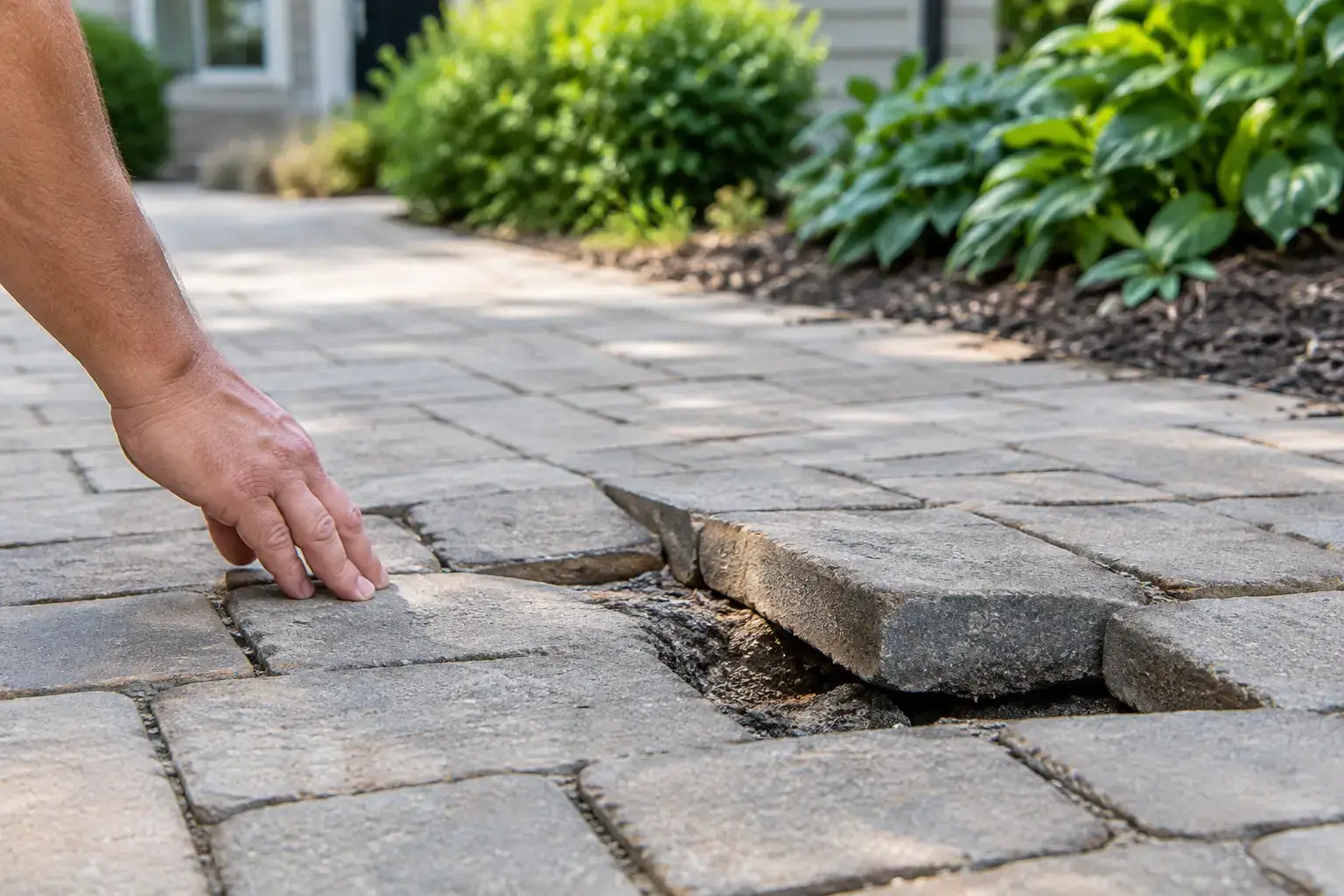
This is one of the most common reasons pavers sink. The first signs may be subtle: a single low paver, widening joints, or a section that feels slightly soft underfoot. Over time, the affected area can drop further, especially where foot traffic, outdoor furniture, vehicles, or snow equipment repeatedly apply pressure.
Base depth is not one-size-fits-all. A pedestrian walkway has different structural needs than a driveway or an area where delivery vehicles may pass. Local soil conditions and drainage also influence the appropriate construction approach.
2. Water is washing out the support below
Water is often the real culprit behind a sunken paver surface. Runoff from roofs, downspouts, sloped lawns, or neighboring pavement can move through joints and into the base. If that water has no controlled path away from the hardscape, it may carry fine material with it and leave voids beneath the pavers.
A low section that holds water after rain is not always caused by the puddle itself. It may be evidence that water has already compromised the bedding sand or aggregate base below. The repair needs to correct both the settled pavers and the water source. Simply adding more sand to the joints may improve appearance briefly, but it will not rebuild lost support.
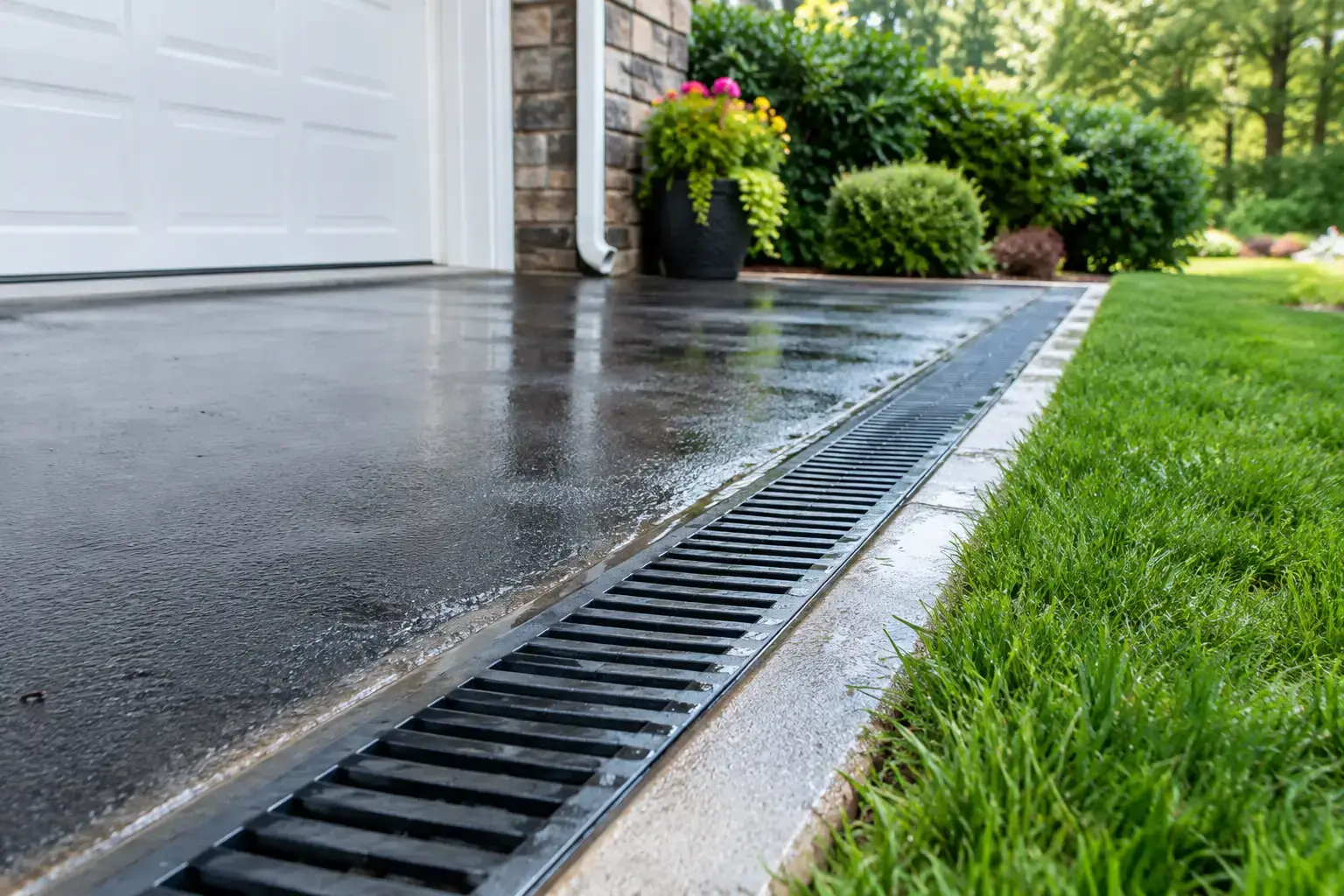
Thoughtful grading, drainage channels, downspout routing, and stormwater solutions can protect a hardscape while improving the way the entire property handles rain.
3. Freeze-thaw cycles are moving the ground
Massachusetts winters put hardscapes to the test. Moisture enters small spaces in the base or surrounding soil, freezes, expands, and then thaws. Repeated cycles can lift, shift, or loosen sections of a paver installation. Once the ground settles again, the surface may not return to its original level.
Freeze-thaw movement is especially likely where drainage is poor or the soil holds water. Clay-heavy soils can be particularly challenging because they retain moisture and change volume as conditions shift. A well-built paver system uses proper excavation, base material, compaction, and slope to reduce the effect of seasonal movement, but no installation benefits from trapped water below the surface.
4. Poor edge restraint is allowing pavers to spread
Pavers work as an interlocking surface. Their edges must be held firmly in place so the field of pavers cannot creep outward over time. Without durable edge restraint, or when restraints are damaged by age, frost movement, or lawn equipment, pavers can separate and settle.
This issue often appears around curved walkways, patio borders, steps, and transitions to a driveway. You may notice pavers tilting near the perimeter, gaps opening between units, or joint sand disappearing more quickly along an edge. Restoring the surface may require resetting the pavers and installing or repairing the restraint that keeps the system stable.
5. The soil below was not prepared for the site
Native soil is not always a dependable foundation. Organic material, loose fill, buried debris, old roots, or recently disturbed ground can decompose or consolidate over time. When that happens, the base above follows the movement.
Properties with prior construction, additions, drainage work, or old landscape features may have variable soil conditions from one part of the yard to another. A patio can look level for years and then develop settlement along one section where fill was not properly compacted before installation.
Before building or rebuilding a paver area, an experienced contractor evaluates the existing grade, soil stability, drainage patterns, and intended use. That site-specific preparation is what gives a finished outdoor space its lasting quality.
6. Heavy loads are exceeding the surface design
Not every paver surface is designed for the same use. A decorative path can settle if a skid steer, delivery truck, dumpster, or vehicle crosses it. A residential driveway can develop depressions if its base was built like a patio rather than engineered for vehicle loads.
Even a patio can be affected by concentrated weight. A large outdoor kitchen, masonry fireplace, hot tub, or heavy planter may require special foundation preparation. These features can absolutely become part of a refined outdoor living space, but they must be considered before construction, not added as an afterthought.
7. Utility work, roots, and nearby excavation disturbed the area
Utility repairs and trenching can leave soil that continues to settle long after a crew has restored the surface. If a trench crosses beneath or beside a paver walk, the backfilled area may compact differently than undisturbed ground. Settlement can also occur after excavation for drainage improvements, fencing, foundations, or landscape walls.
Tree roots are another variable. Roots can lift pavers in one area while surrounding soil settles in another. Cutting major roots without a plan can create its own stability and tree-health concerns. The right solution depends on the tree, the location of the hardscape, and the extent of movement.
Signs the Problem Needs More Than a Quick Reset
A few loose pavers in an otherwise stable walkway may only need localized resetting, fresh bedding material, and renewed joint sand. However, certain signs suggest a deeper condition: recurring settlement in the same place, standing water, pavers that rock across a broad area, spreading edges, visible washout, or a noticeable change in slope toward the home.
Pay close attention to surfaces near entryways, stairs, pools, and driveways. Uneven pavers create a safety issue, and water directed toward a foundation can lead to more expensive concerns than the hardscape repair itself. For commercial properties, an uneven walkway may also affect accessibility and liability.
How Professionals Repair Sunken Pavers
Lasting repair begins with diagnosis, not with filling the low spot from above. The affected pavers are carefully removed and set aside. The contractor then inspects the bedding layer, aggregate base, edge restraints, adjacent grade, and water movement to identify why the section settled.
If the base is intact and only the bedding layer has shifted, the repair may be relatively contained. If material has washed out or the base was never built correctly, the work may require deeper excavation, new compacted aggregate, and drainage improvements before the pavers are reinstalled. Existing pavers can often be reused when they are in good condition, preserving the character of the original design while restoring a clean, level finish.
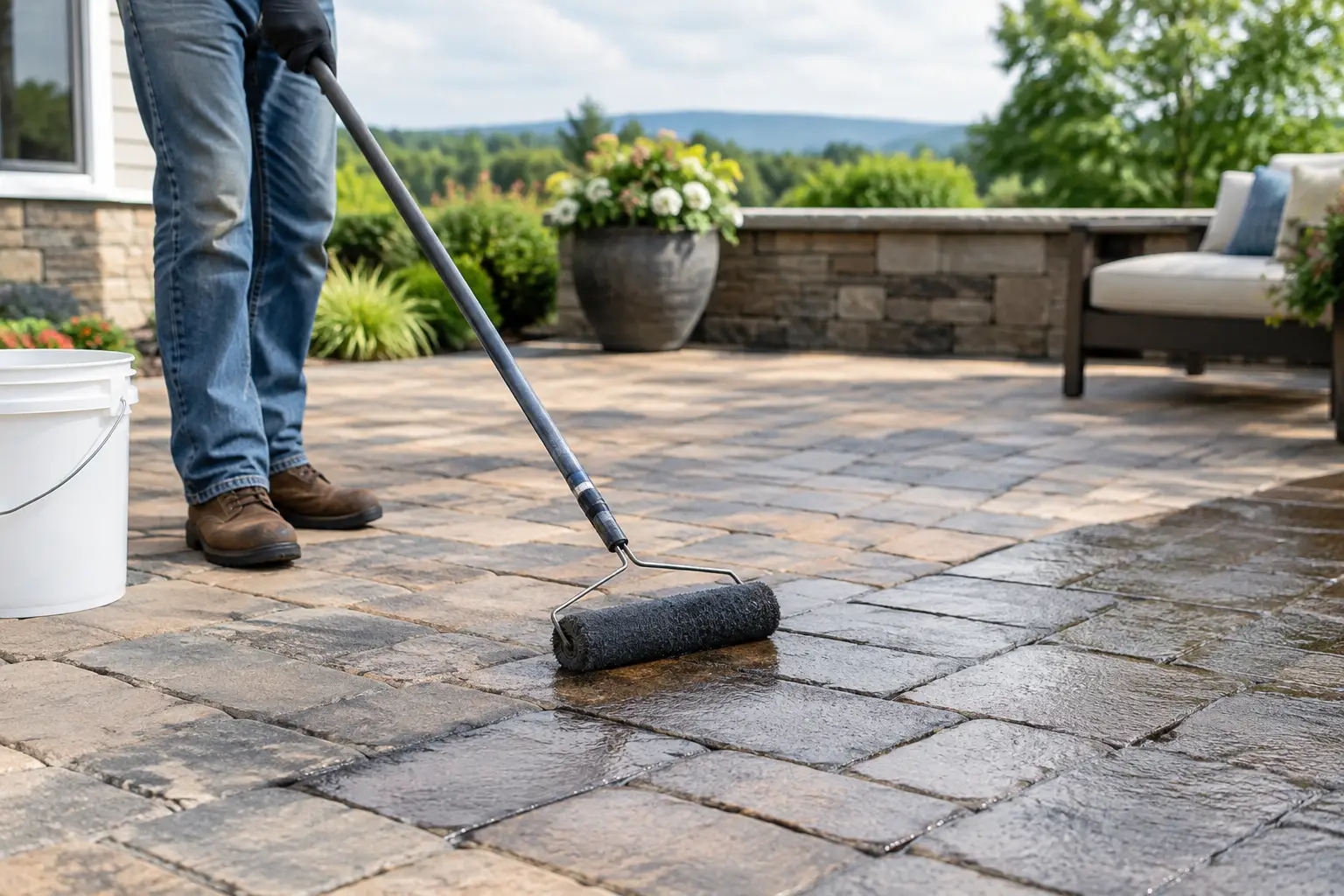
After resetting, joint material is swept into place and compacted so the pavers once again act as a unified surface. Where appropriate, paver sealing can help enhance color, simplify cleaning, and support a more polished appearance, though it is not a substitute for sound base construction or proper drainage.
Protecting Your Hardscape From Future Settlement
Regular observation is the simplest form of prevention. After major storms and spring thaw, look for pooling water, disappearing joint material, loose edges, or new dips. Keep downspouts from discharging directly onto patios and walks, and avoid placing heavy loads on surfaces not designed for them.
Snow removal also deserves care. Use equipment and blade settings that avoid catching paver edges, particularly where the surface transitions to a lawn, curb, or driveway. If deicing products are needed, choose materials appropriate for concrete pavers and use them according to product directions.
A sunken paver does not have to diminish the safety or elegance of your property. With a careful assessment of the base, drainage, and surrounding landscape, the surface can be restored to the level, durable foundation an outdoor sanctuary deserves.